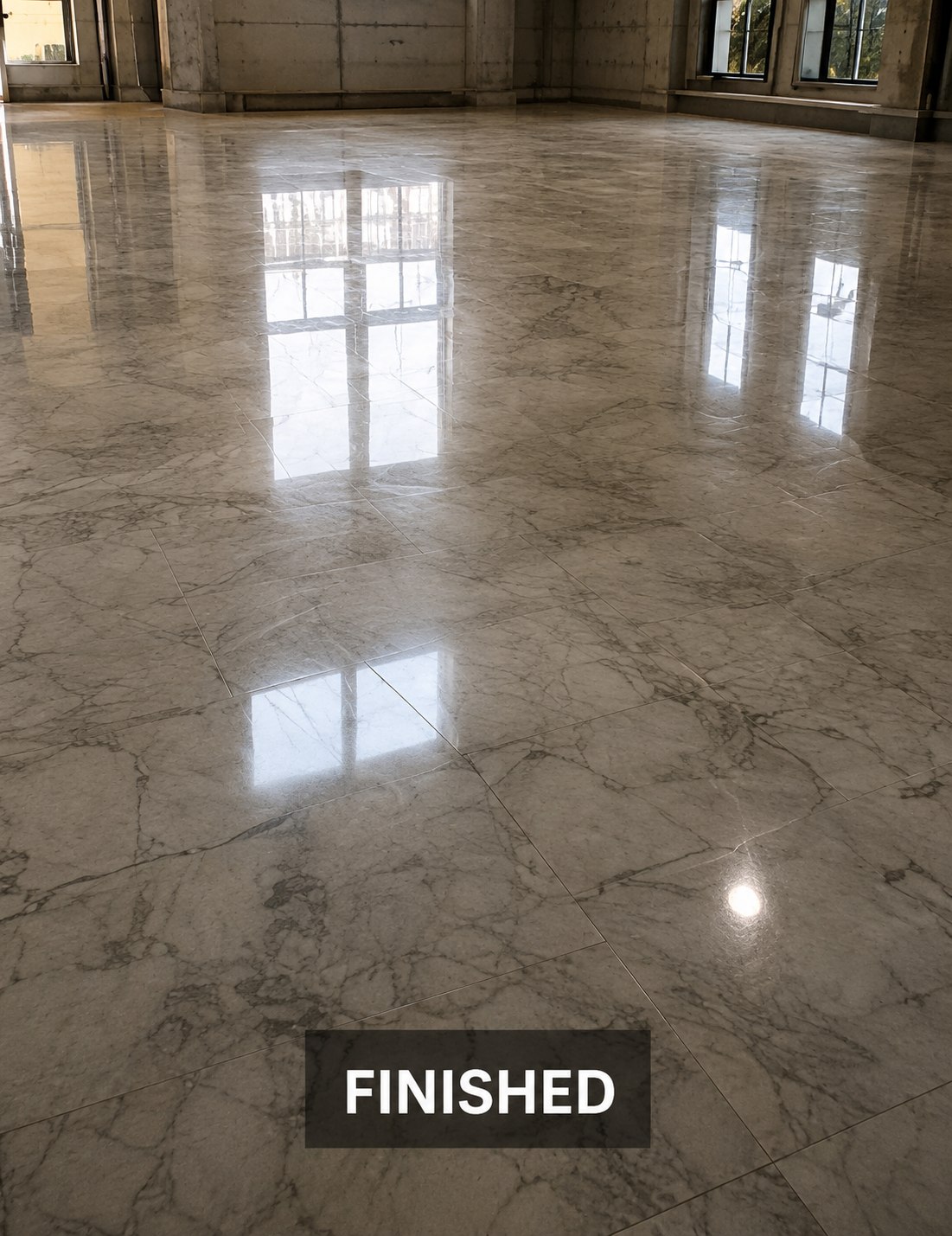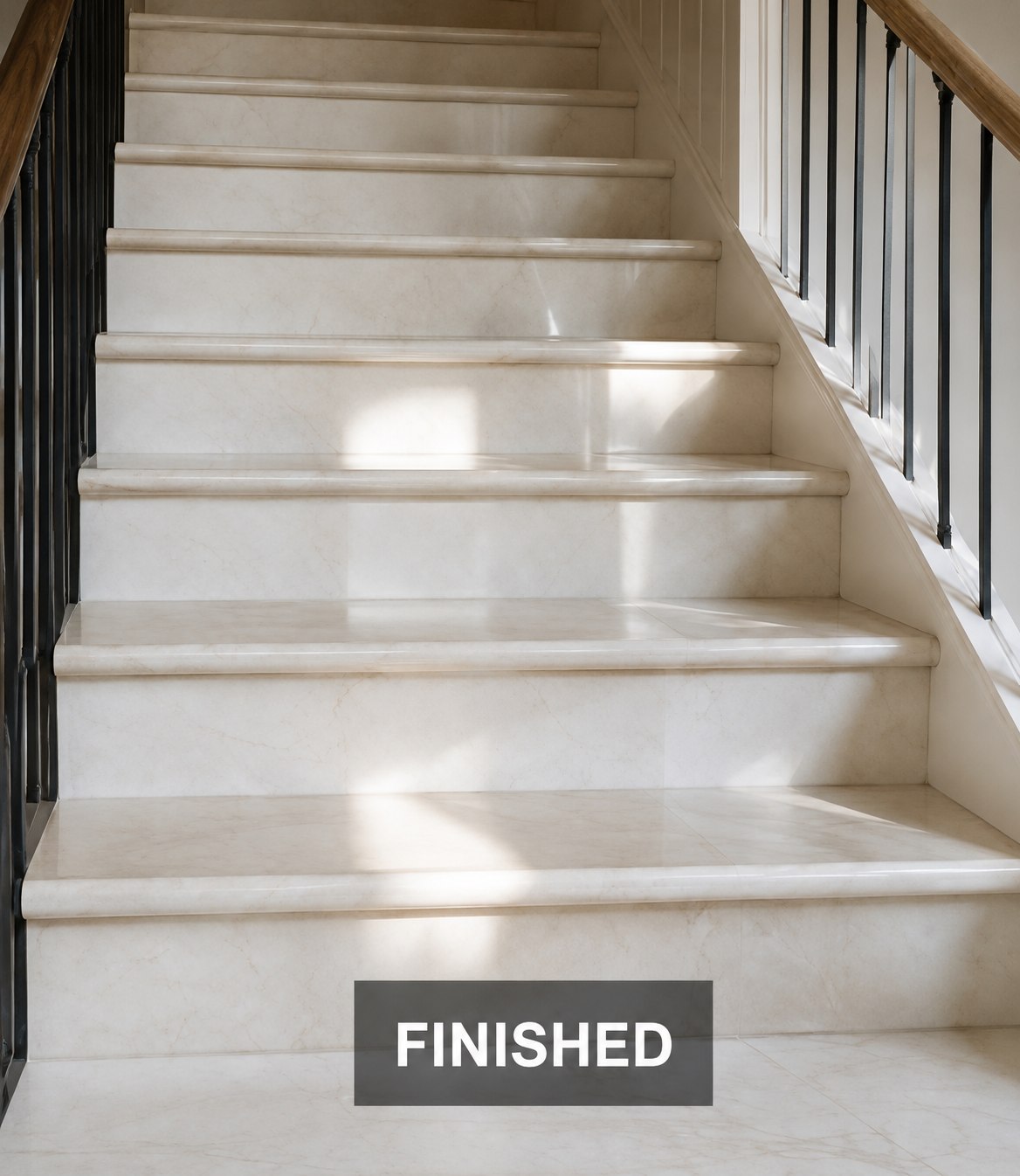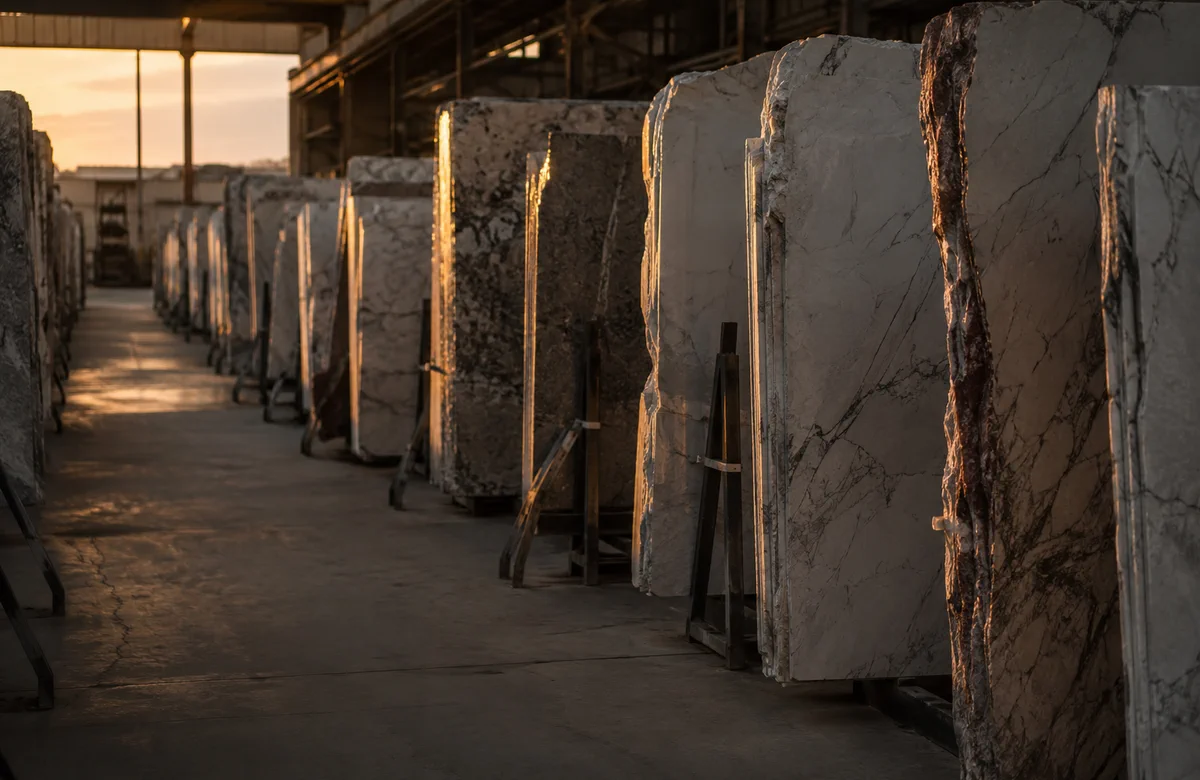
Long before anyone quarried a slab for a kitchen island, stone was the material that got humanity through its first tools, its first monuments, and its first permanent buildings. The materials in your home today are the latest chapter of a very long story.
The earliest stone tools found so far date back well over three million years — older than our own species. For most of human history, stone wasn't a design choice; it was the only durable material available. It shaped the first blades, the first ground-and-polished axes, and eventually the first permanent structures, because unlike wood or hide, worked stone didn't rot, burn, or wear out in a generation.
By the time agriculture and early cities appeared, stone had already made the leap from tool to architecture — and the ambition of what people were willing to move and shape it into kept growing.
The pyramids at Giza, Stonehenge, the megaliths scattered across nearly every continent — all built using nothing but manual labour, timber, rope, and an enormous amount of patience, centuries before anyone had powered machinery. Some of those blocks weigh more than a loaded truck, moved and set with a precision that still isn't fully understood.
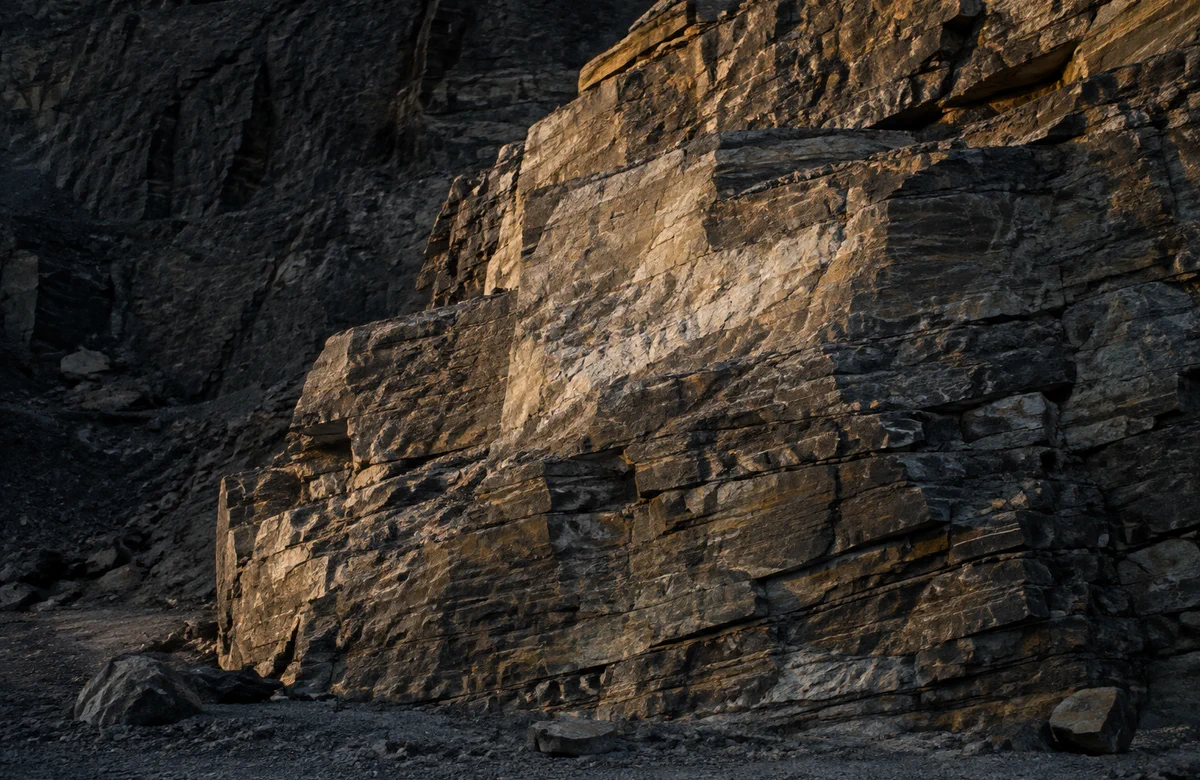
The Romans industrialised quarrying at a scale the ancient world hadn't seen — the same Carrara quarries that supplied Michelangelo were already being worked in Roman times. Stone stopped being just functional and became a statement: whoever could move the biggest block, cut it the cleanest, and set it the most precisely was making a claim about permanence and power.
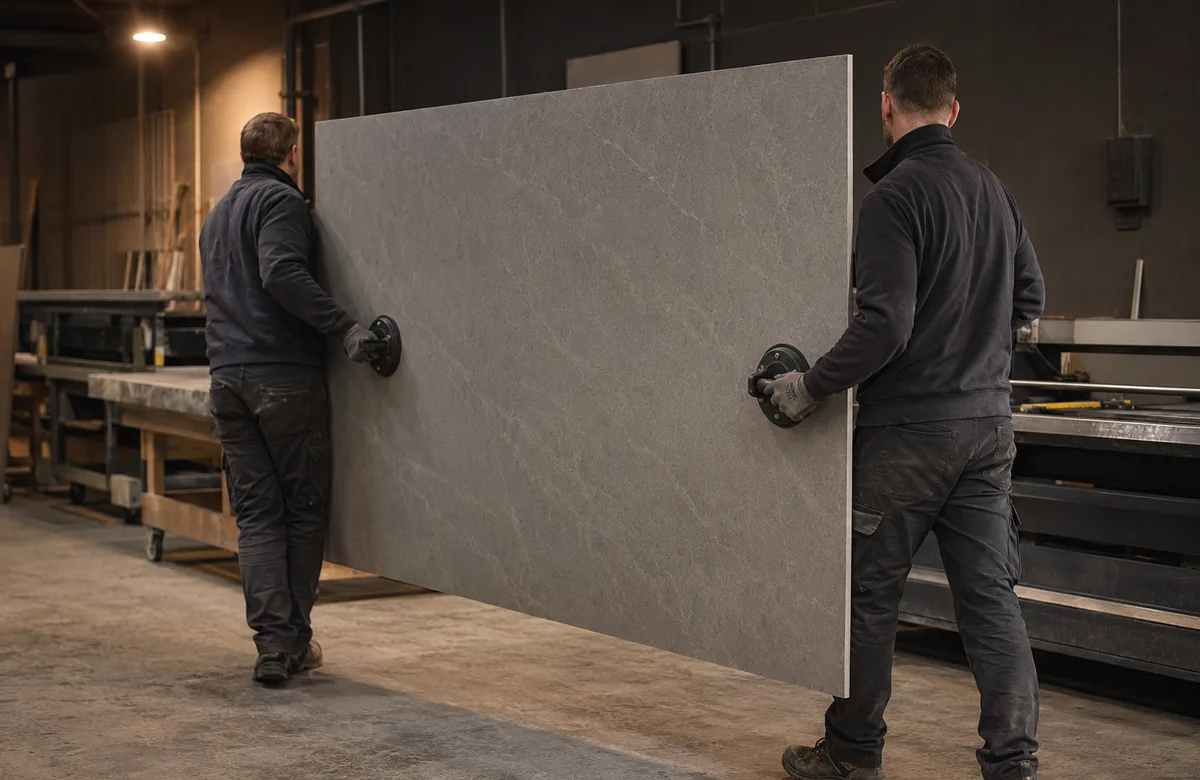
For most of that history, working stone at all was slow, expensive, and physically brutal — which is exactly why it was reserved for temples, palaces, and monuments, not homes. Diamond tooling, powered saws, and eventually computer-guided cutting changed that arithmetic completely over the twentieth century, turning a job that once took a quarry crew months into one a small team can finish in days.
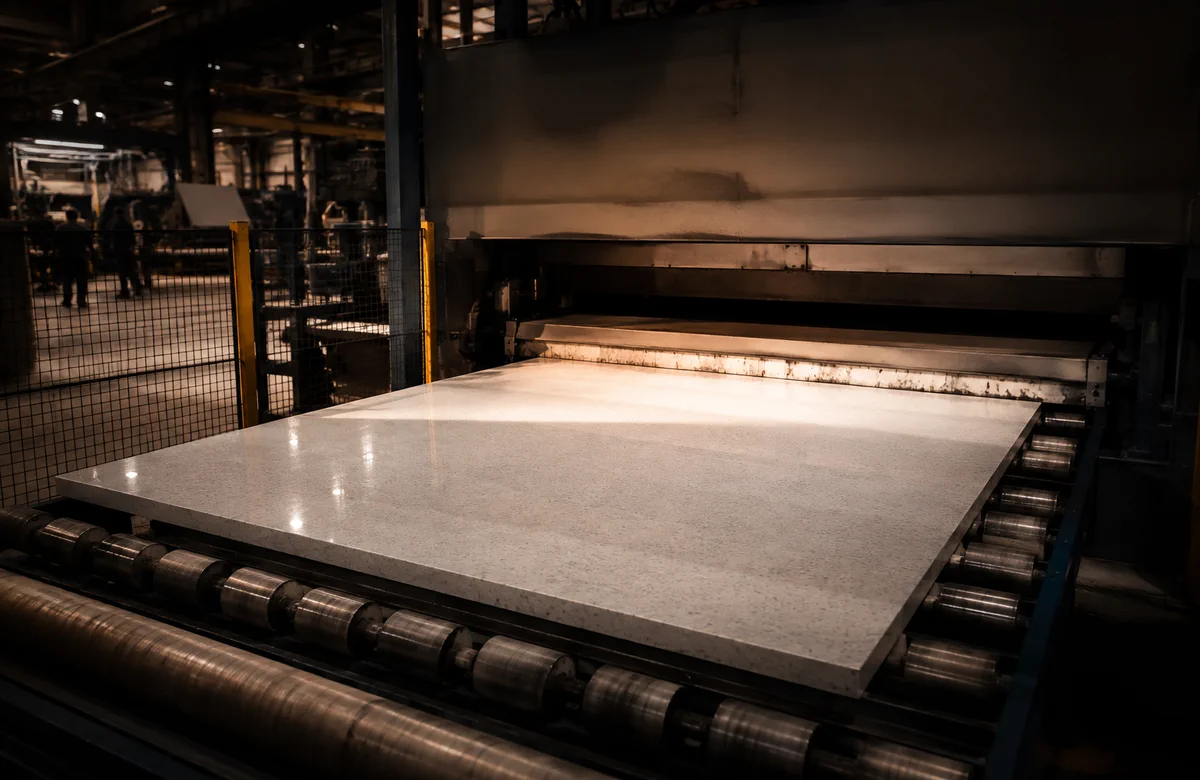
Then came a genuinely new idea: instead of only cutting stone, engineer it. Vacuum-compacted quartz surfaces arrived in the 1960s, followed decades later by large-format sintered porcelain slabs — materials that didn't exist as recently as your parents' generation, built specifically to solve the durability and consistency problems natural stone can't. That's the real story of the last hundred years: what used to require a quarry, a fortune, and a palace to own is now something almost any home can have a piece of.
Each material has its own origin, its own strengths, and its own way of asking to be looked after. Pick one to read the full story.
Compressed ancient seabed, recrystallised by heat and pressure into the stone that's defined luxury for thousands of years.
Read the story → MANUFACTUREDCrushed quartz and resin, vacuum-compacted into the most consistent, forgiving surface on this list.
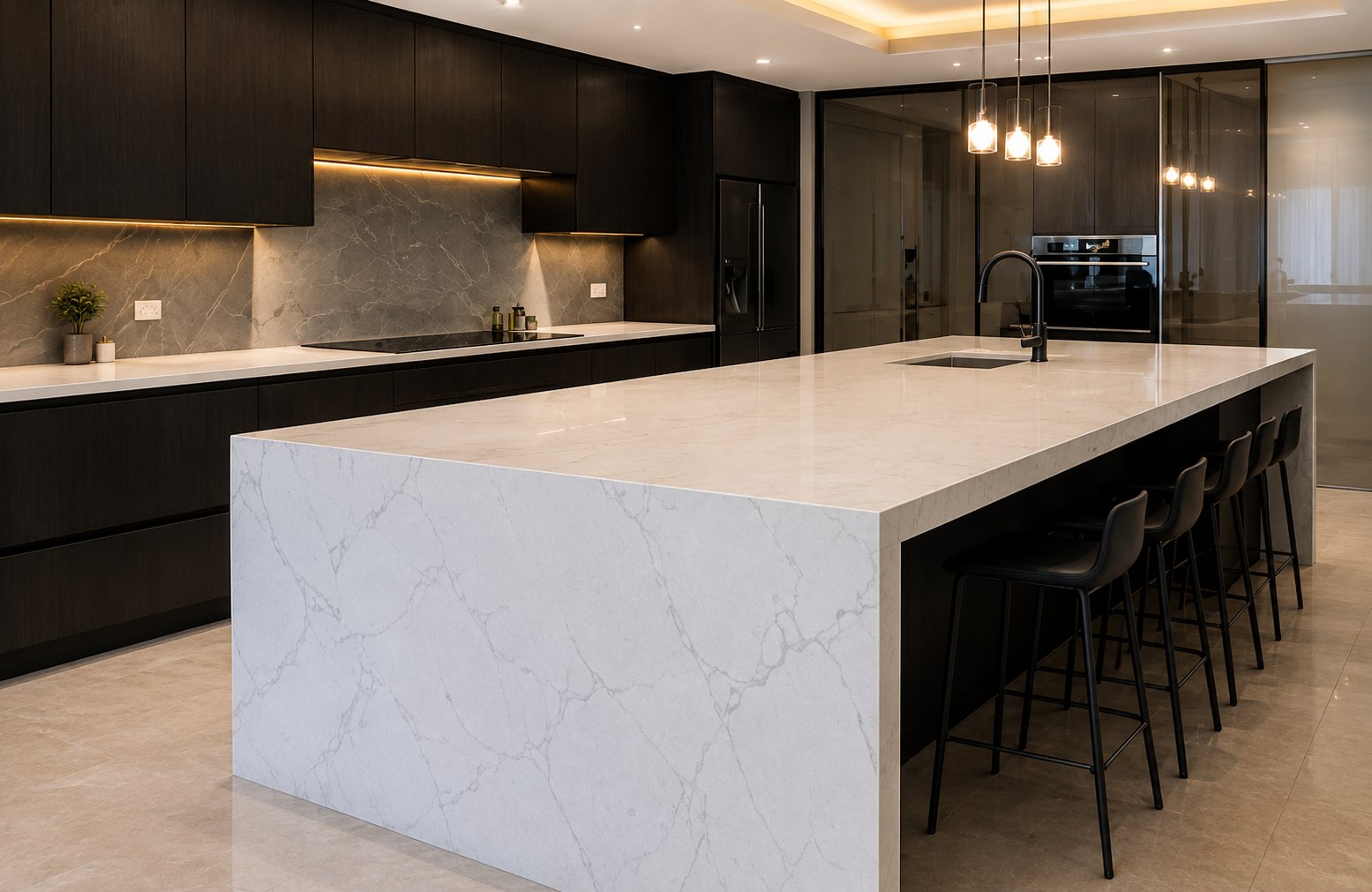
Read the story → MANUFACTUREDRefined clay fired to near-glass density, in slabs big enough to cover a kitchen island with barely a seam.
Read the story → NATURAL STONESandstone pushed past its limit into one of the hardest natural stones you can put in a home.
Read the story →Not sure which one is right for your space? Tell us what you're planning and we'll talk you through it.